Moisture-first approach
We prioritize identifying the water source and wet materials, because moisture control is what stops recurrence.
Serving Colorado Springs, Colorado & surrounding areas
Mon–Fri 8am–6pm · Sat 9am–2pm
Mold Inspection · Colorado Springs
If you smell a musty odor, see staining, or have had a leak, a professional inspection can confirm what's going on and where moisture is feeding it so you can choose the right next step with confidence.
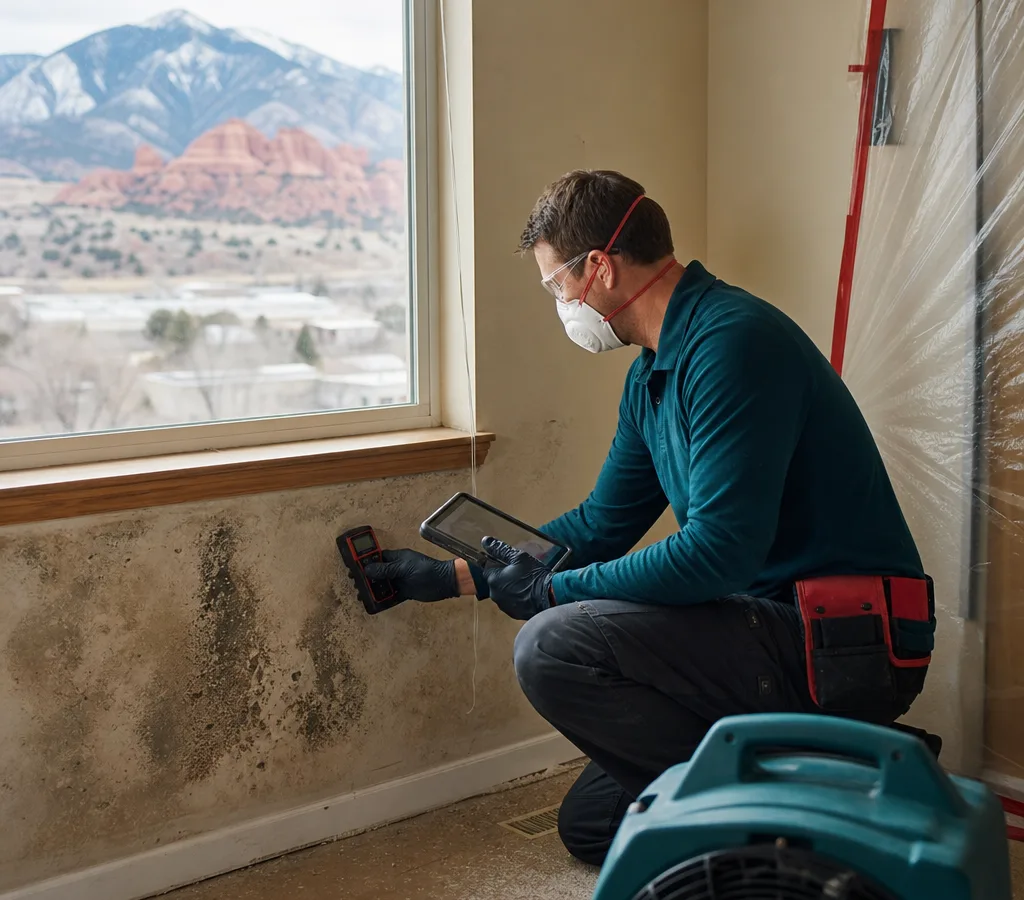
Schedule an inspection when odors, staining, leaks, condensation, or unresolved moisture leave you needing clear answers.
Know When to Investigate
A mold inspection is most useful when you need answers you can act on. In Colorado Springs, dry air can mask a problem until a plumbing leak, snowmelt intrusion, or a humidified room creates a pocket of moisture. These are the situations where an inspection pays off:
An inspection focuses on two things: whether indoor fungal growth is likely present, and what moisture source is allowing it to persist. That second part matters because cleanup without moisture control often leads to repeat issues.
Inspection Scope
A proper inspection is more than a quick look at visible spots. Mold can grow behind drywall, under flooring, in attics, and inside wall cavities when moisture is trapped.
Typical scope includes:
Sampling is not automatic. If you already have visible growth and an obvious moisture cause, the most useful deliverable can be a moisture-focused scope: where the water is coming from, what materials are affected, and what areas should be opened by qualified trades so the cleanup plan is accurate.
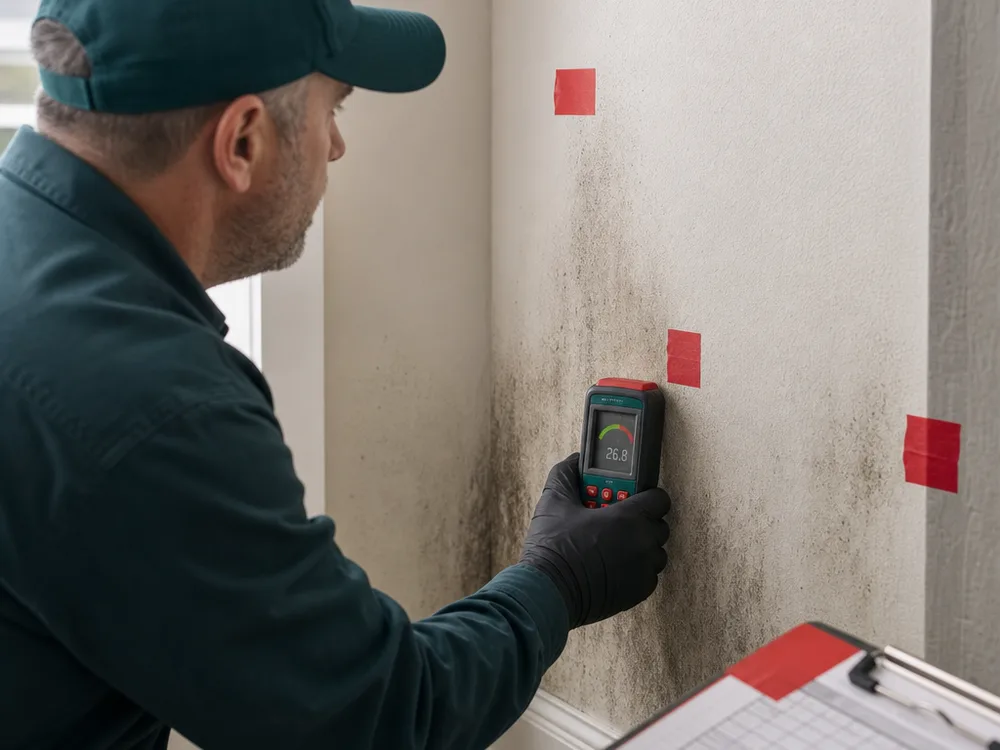
We prioritize identifying the water source and wet materials, because moisture control is what stops recurrence.
When samples are collected, we explain what each sample answers and how results should be interpreted in context.
We document observations so landlords, buyers, sellers, and repair contractors can work from the same record.
You'll get a path forward: what to dry, what to remove, what to contain, and what to repair based on the conditions found.
We work clean, minimize disruption, and keep containment and safety in mind around kids, pets, and sensitive occupants.
Front Range Property Context
Colorado Springs homes see mold for the same reason as anywhere else: moisture plus a material that can support growth. What changes locally is how moisture shows up.
Small exterior gaps can widen over time, and snowmelt can find its way to window wells, sill plates, and lower wall sections.
Warm indoor air meeting cold surfaces drives condensation at windows, exterior corners, and behind furniture placed against outside walls.
Humidity and air movement issues can keep framing damp, especially if downspouts or grading direct water toward the foundation.
We see patterns depending on the part of town and housing style. Broadmoor-area homes often have complex rooflines and finished lower levels where a slow leak can stay hidden longer. Briargate and Stetson Hills have many newer builds with finished basements and tight building envelopes, so mechanical ventilation and humidifier settings matter. In Old Colorado City, older construction and remodel layers can create concealed cavities where moisture migrates.
The point is not the neighborhood name. It's that the inspection has to match the way your home is built and how water and air move through it.
If inspection results indicate cleanup is needed, Mold Removal Colorado Springs also performs mold remediation so you can move from answers to a defined scope of work without starting over with a new team.
Call Now 719-284-2683Planning Your Inspection
Mold inspection in Colorado Springs typically ranges from about $250 to $700, depending on home size, the number of areas to evaluate, and whether sampling is needed. A straightforward inspection of one concern area is usually at the lower end, while larger homes, multiple rooms, attic plus basement evaluation, and sample collection tend to price higher.
Final cost depends on access, how much moisture mapping is required, how many samples are appropriate for your goal, and how soon you need scheduling. Exact pricing is confirmed once we understand the property and the concerns you want the inspection to answer.
From Concern to Findings
We start with what you're seeing or smelling, any history of leaks, and which rooms feel most affected.
We check likely moisture pathways and use meters to identify elevated readings in drywall, trim, subfloors, and other materials.
If sampling will change your decision, we collect it in the right locations and document the chain of observations.
We explain what appears to be happening, what areas are most likely involved, and what should be opened or dried first.
You receive a clear summary you can use to plan repairs, coordinate with a landlord or property manager, or set up remediation if needed.
Straight Answers
You need an inspection first, and testing only if results will change what you do next. In many homes, visible growth plus confirmed moisture is enough to plan safe removal and repairs; sampling is most helpful when growth is hidden, when you need documentation for a transaction or rental, or when you're trying to verify whether an odor complaint is likely mold-related.
Most inspections take 60 to 120 minutes on site, depending on home size and how many areas need moisture mapping. If attic access is difficult, a crawlspace is involved, or multiple rooms have symptoms, the visit can take longer because we need enough readings and photos to support the conclusions.
We can often identify strong indicators of hidden growth using moisture meters, infrared as a screening tool, and by tracing moisture pathways, but confirmation sometimes requires limited, targeted opening by the appropriate trade. The goal is to reduce guesswork so any openings are in the right place and as small as practical.
Yes, a standard inspection is non-destructive and safe for most occupants because it focuses on observation and moisture measurement. If we find conditions that suggest active growth in an occupied area, we'll discuss practical precautions until cleanup and moisture control are complete.
Yes, we inspect rentals and provide written findings that describe observed conditions, moisture indicators, and recommended next steps. Documentation matters most when there's an odor complaint, a history of leaks, or repeated surface spotting in bathrooms, bedrooms, or basements.
If possible, keep the area accessible and don't scrub or bleach suspected growth right before the visit, because it can remove surface evidence while the moisture problem remains. Make a short list of when you first noticed the issue, recent leaks or repairs, and which rooms feel most affected.
Inspection Safeguards
The standard inspection begins with visual observations, building history, moisture measurements, and infrared screening rather than unnecessary demolition.
When concealed conditions need confirmation, findings help qualified trades focus any opening in the right place and keep it as limited as practical.
We minimize disruption and discuss practical precautions if conditions suggest active growth around children, pets, or sensitive occupants.
Photos, moisture observations, suspected sources, and next steps create a shared record for homeowners, tenants, property managers, and repair contractors.
Start With an On-Site Inspection
Tell us what you're noticing and where it's happening in the home or rental. We'll schedule a mold inspection, document what we find, and outline the next steps to address moisture and move forward safely.
Back to mold removal in Colorado Springs.