Clear scope and documentation
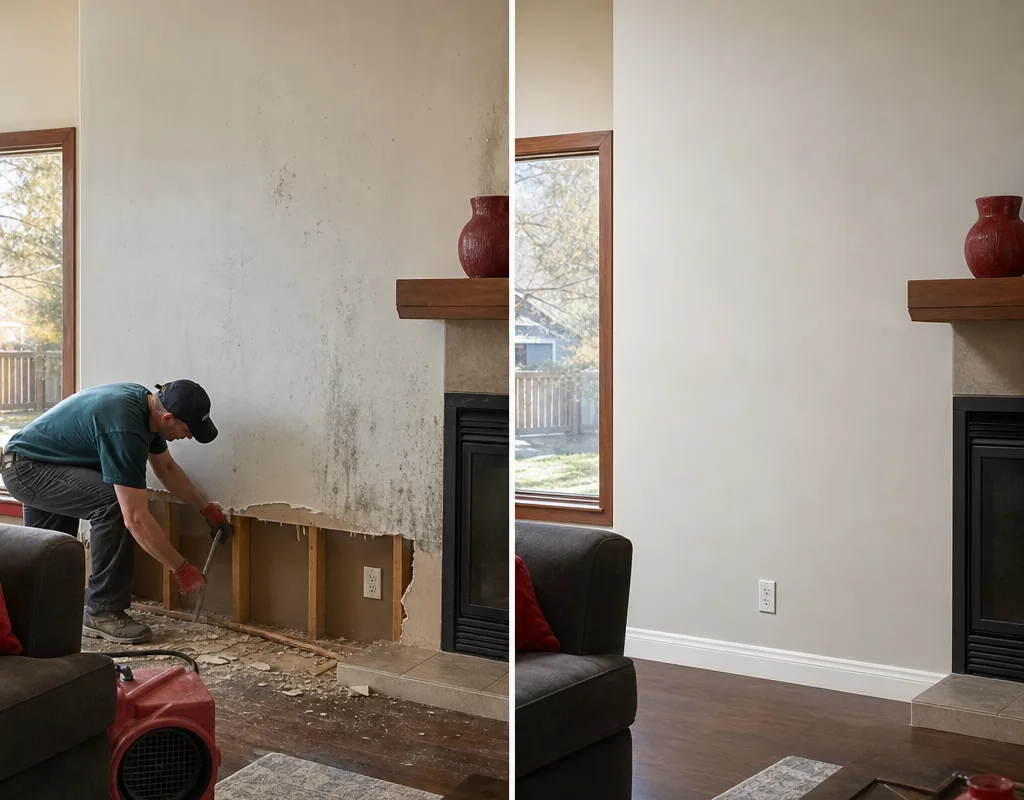
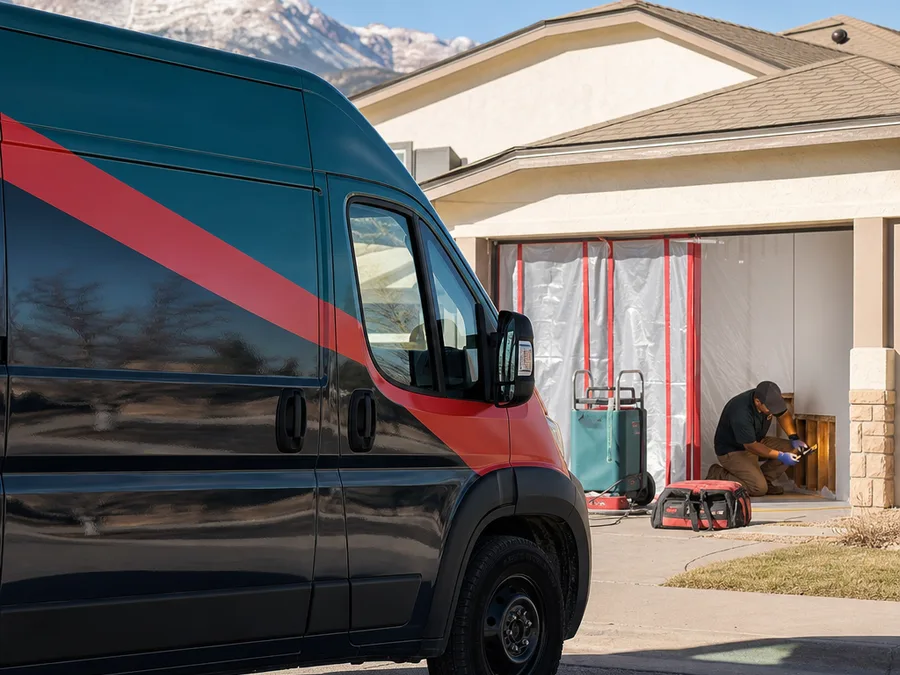
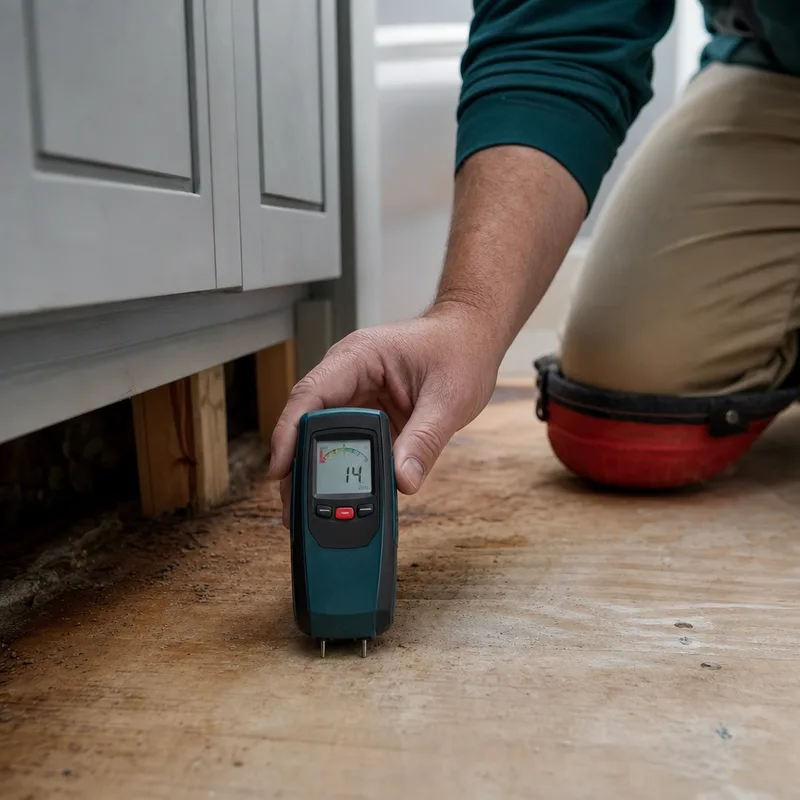
We identify the water source, map the affected area, and document moisture readings so you know what is wet and what is not.
Serving Colorado Springs, Colorado & surrounding areas
Mon–Fri 8am–6pm · Sat 9am–2pm
Water Damage Repair · Colorado Springs
Stop water from turning into structural damage. We respond fast, document what we find, dry the building the right way, and repair what it takes to make your home safe and livable again.
Act Before Moisture Spreads
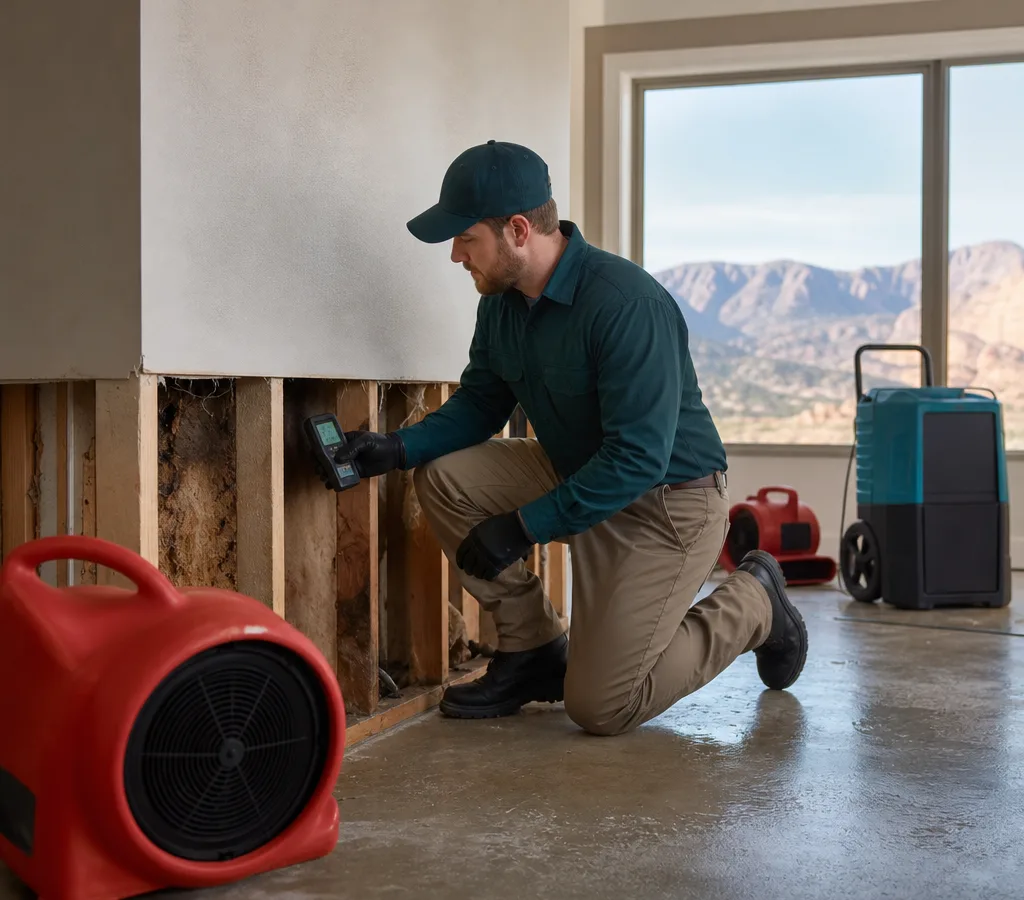
Water damage repair Colorado Springs homeowners need is rarely just “dry the carpet.” Water moves through baseboards, under flooring, into insulation, and behind cabinets. If it is not dried and treated correctly, you can end up with swelling, delamination, odors, and mold growth.
Our team handles the full water-damage workflow: emergency cleanup, controlled demolition when needed, structural drying with commercial equipment, monitoring moisture until materials reach dry standards, and then repair and rebuild. We work in Colorado Springs neighborhoods with a mix of older and newer construction, where materials vary from plaster and lath to modern drywall and engineered flooring, and each type needs a different approach.
If you are also concerned about microbial growth after a leak or flood, our mold remediation work often follows water losses once drying is complete and the source is fixed.
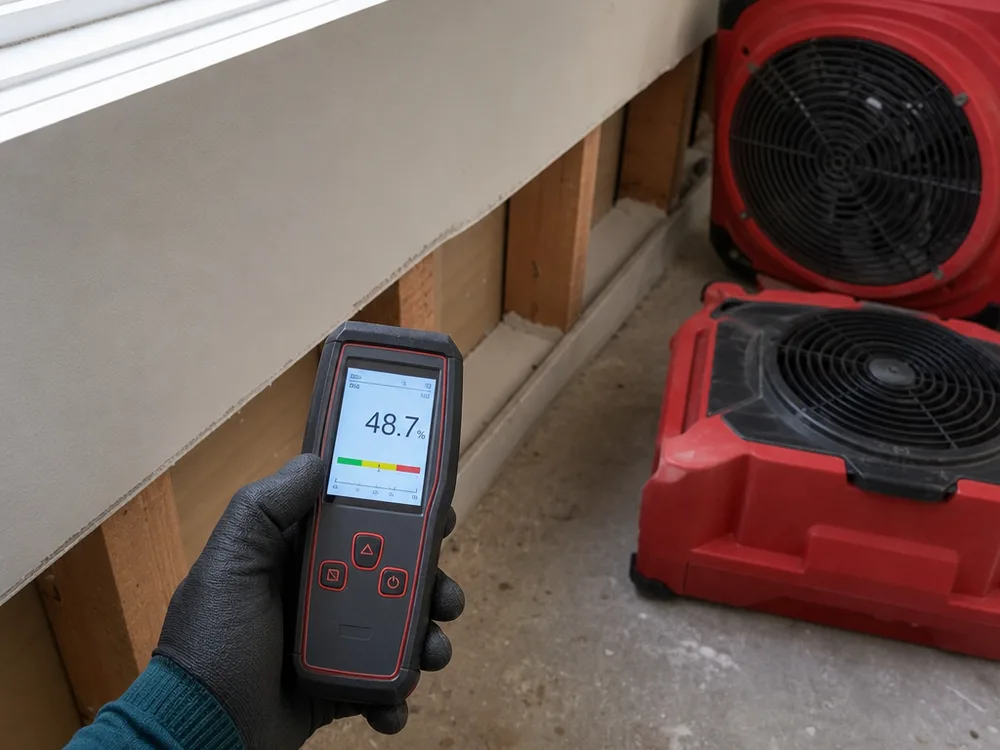
We identify the water source, map the affected area, and document moisture readings so you know what is wet and what is not.
Clean-water supply leaks are handled differently than water from ground intrusion, drain backups, or overflowing fixtures. We set containment and PPE needs to match the situation.
Air movers, dehumidifiers, and targeted drying are set up based on material type and room layout, then adjusted as moisture levels change.
When materials cannot be dried safely, we remove only what is necessary, such as wet insulation, swollen baseboards, or compromised drywall.
Once dry, we repair drywall, trim, paint-ready surfaces, and other affected finishes so the space can be put back into service.
Colorado Springs weather can swing quickly. We plan drying around indoor humidity, temperature, and airflow so progress stays consistent.
Leaks, Flooding and Intrusion
Most projects start with one of a few scenarios:
No matter the cause, the right sequence is the same: stop the source, protect unaffected areas, extract standing water, dry and dehumidify, verify dryness, then repair. Skipping steps is how hidden moisture gets left behind.
From Source Control to Rebuild
We confirm the water source is stopped and look for electrical, slip, and contamination risks. If a plumber is needed, that comes first.
We use moisture meters and thermal tools where appropriate to track how far water traveled, including under floors and behind walls.
We remove standing water, lift saturated materials when needed, and set equipment to start lowering humidity and stopping further damage.
Wet drywall, insulation, or flooring that cannot be dried safely is removed in a clean, contained way to open the structure for drying.
Equipment is adjusted based on daily moisture readings. The goal is to reach dry standards for the affected materials, not just “feel dry” to the touch.
After drying verification, we restore finishes and materials so the space returns to normal use, with attention to matching transitions and trim details.
Planning the Work
Water damage repair in Colorado Springs typically ranges from about $1,500 to $7,500 for many residential losses, with large or contaminated losses reaching $10,000+. A small supply-line leak with limited drying and minor drywall repair may land at the low end, while multi-room flooding with flooring removal, cabinet toe-kick work, and extended drying trends higher.
Final cost depends on how far water traveled, the category of water—clean versus contaminated—what materials are affected, access to wet cavities, and how long drying takes. Exact pricing is confirmed after an on-site inspection and moisture mapping.
If you have active leaking, standing water, or wet drywall and flooring, getting a qualified team in early is the best way to reduce tear-out and shorten drying time.
Call Now 719-284-2683Straight Answers
You should start mitigation the same day whenever possible, because moisture spreads and materials begin to swell or break down quickly. Early extraction and dehumidification can reduce how much drywall, insulation, and flooring must be removed. If temperatures are low and you are dealing with a burst pipe, quick response also helps prevent additional freezing-related damage while the home is being stabilized.
Common signs include a musty odor, bubbling paint, soft drywall, baseboards pulling away, cupping hardwood, and unexplained staining at ceiling corners or around vents. The only reliable way to confirm hidden moisture is moisture mapping with meters and targeted inspection, because surface dryness can be misleading.
Often you can stay home if the affected area is limited and there are no contamination concerns, but drying equipment is loud and the space may be restricted. If water came from a backup or other contaminated source, or if multiple rooms require demolition and containment, temporary relocation can be the safer option until cleanup and initial drying are complete.
Drywall and insulation are sometimes salvageable, but it depends on the water category, how long they were wet, and whether the wall cavity can be dried to standard. Insulation that is saturated usually needs removal, and drywall may require a flood cut to open the cavity for proper airflow and dehumidification.
Many residential drying jobs take about 3 to 5 days, but the timeline changes with material type, temperature, humidity, and how far moisture traveled. Dense materials like hardwood assemblies, multiple layers of flooring, or tight wall cavities can extend drying time, and we confirm progress with moisture readings rather than the calendar.
Mold risk increases when building materials stay damp, especially in dark cavities like behind cabinets or inside walls. The practical way to prevent mold is rapid extraction, controlled demolition where needed, and verified structural drying. If mold is already present or suspected, Mold Removal Colorado Springs can advise on next steps after the moisture source is fixed and drying is underway.
Start With an On-Site Inspection
Tell us what happened and what areas are wet. We will schedule an on-site inspection, map the moisture, and explain what it will take to dry the structure and complete the water damage repair.
Back to mold removal in Colorado Springs.